Discover the UK’s Most Famous Tourist Attractions
The United Kingdom is a fantastic destination for travellers who enjoy history, beautiful scenery, historic architecture, and lively cities. You can spend one day exploring royal palaces in London, the next wandering through charming old streets, and another discovering ancient monuments or dramatic countryside.
One of the best things about travelling around the UK is how different each destination feels. London is full of world-famous landmarks, museums, and shopping districts, while cities such as Bath and Edinburgh offer a more historic atmosphere. Beyond the cities, you’ll find remarkable prehistoric sites, grand castles, and peaceful landscapes that feel a world away from everyday life.
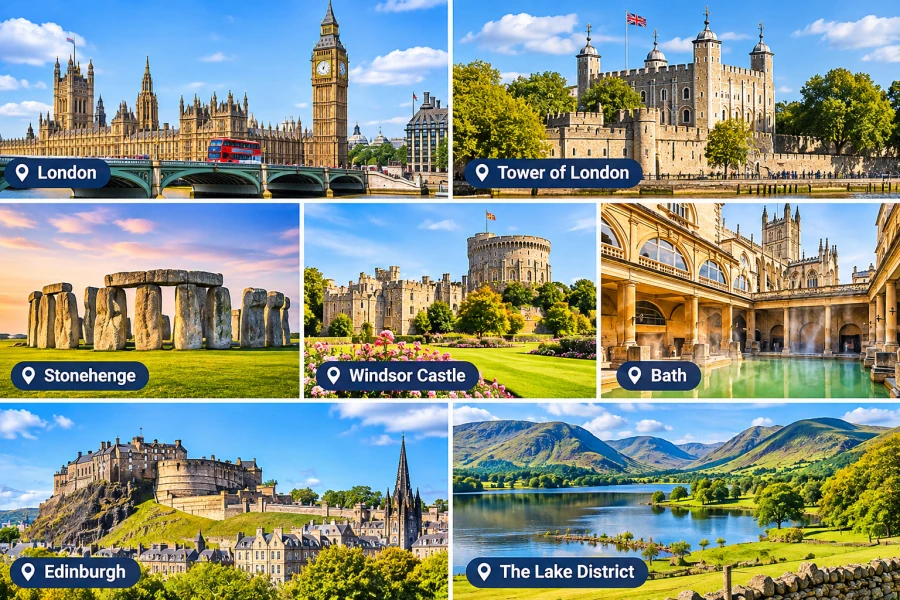
If you’re planning your first trip to Britain, these seven famous attractions are an excellent place to start.
1. London: The Best City for First-Time Visitors
London is often the first stop for international visitors, and it’s easy to understand why. The British capital combines royal history, impressive architecture, famous museums, shopping streets, and a food scene influenced by cultures from around the world.
Start with Big Ben and the Houses of Parliament, two of the city’s most recognisable landmarks. Nearby, Westminster Abbey is closely associated with British royal ceremonies and centuries of national history.
Buckingham Palace is another major attraction, particularly for visitors interested in the British monarchy. Depending on the season, you may also be able to watch the Changing of the Guard, although schedules can vary.
For a different perspective, take a ride on the London Eye and enjoy panoramic views across the River Thames. If you prefer exploring on foot, the South Bank is a pleasant area for riverside walks, cafés, street performers, and views of London’s skyline.
Best for: First-time visitors, families, history lovers, and shopping enthusiasts.
Travel tip: London has an extensive public transport network, so you generally don’t need a car for sightseeing. Group nearby attractions together to spend less time travelling across the city.
Allow at least two or three full days if you want to experience the main sights without rushing.
2. Tower of London: A Journey Through British History
The Tower of London is one of the country’s most historically significant landmarks. Founded by William the Conqueror in the 11th century, it has served different purposes over the centuries, including a royal residence, fortress, prison, and place of execution.
Today, visitors come to explore its historic buildings, learn about famous figures from British history, and see the Crown Jewels.
The medieval White Tower is one of the site’s main highlights. The complex also contains historic courtyards and exhibitions that reveal how the fortress changed over time.
The Tower’s stories are fascinating, but some are also quite dark. Tales of royal imprisonment, political intrigue, and famous executions give the site a very different atmosphere from London’s more modern attractions.
Its location near Tower Bridge makes it easy to combine the visit with a walk along the Thames.
Best for: History enthusiasts, families with older children, and anyone interested in royal history.
Travel tip: Set aside around three hours for your visit. Booking admission in advance can help with planning, especially during busy holiday periods.
If you’re visiting several London landmarks, the Tower of London fits well into an itinerary that includes Tower Bridge and the riverside area.
3. Stonehenge: One of Britain’s Most Extraordinary Ancient Sites
Located in Wiltshire, Stonehenge is among the world’s best-known prehistoric monuments. Its enormous standing stones have fascinated visitors and researchers for generations.
The monument dates back thousands of years, and its exact original purpose remains a subject of ongoing archaeological study. Its construction and alignment reveal how much ancient communities were capable of achieving long before modern machinery existed.
Seeing Stonehenge in person offers a very different experience from looking at photographs. The stones stand within a wide, open landscape, and the surrounding countryside adds to the sense of scale and history.
Visitors can learn about the monument’s archaeological background through the visitor facilities and exhibitions. The surrounding landscape also contains other prehistoric features, making the wider area historically important.
Best for: History lovers, photographers, and travellers interested in archaeology.
Travel tip: Stonehenge is outside London, so plan it as a separate excursion rather than a quick stop between central London attractions. Many visitors travel by car or join an organised day tour.
Book ahead where possible and check the official visiting arrangements before setting off. Allow enough time for transport in both directions.
4. Windsor Castle: Experience Britain’s Royal Heritage
Windsor Castle is one of the UK’s most famous royal landmarks and a particularly appealing destination for visitors who want to explore Britain’s royal history.
Located in Windsor, west of London, the castle has been associated with the monarchy for centuries. Its imposing walls, historic rooms, and magnificent architecture make it a memorable place to visit.
One of the major highlights is St George’s Chapel, which has played an important role in royal ceremonies and is the burial place of several monarchs.
After exploring the castle, take time to walk through Windsor itself. The town has traditional pubs, cafés, independent shops, and attractive streets that make it enjoyable even after your castle visit is over.
The River Thames is also nearby, offering pleasant riverside walks and opportunities to relax after sightseeing.
Best for: Royal history enthusiasts, couples, families, and visitors staying in London.
Travel tip: Windsor is a practical day trip from London, but check train connections and castle opening arrangements before travelling. Access to certain areas may vary depending on royal events and the visitor schedule.
Allow several hours for the castle and additional time if you’d like to explore the town.
5. Bath: Elegant Architecture and Historic Streets
Bath is one of England’s most distinctive historic cities, known for its Georgian architecture, Roman heritage, and honey-coloured stone buildings.
The city’s most famous attraction is the Roman Baths, where visitors can learn about the ancient bathing complex built around natural hot springs. The historic site offers a fascinating look at how the Romans used the area’s thermal waters.
Another highlight is the Royal Crescent, a sweeping row of Georgian townhouses that has become one of Bath’s most recognisable architectural landmarks. The nearby Circus is equally impressive, with its curved arrangement of historic buildings.
Bath is also a lovely city for simply walking around. Its compact centre makes it easy to explore independent shops, cafés, historic streets, and riverside areas without constantly relying on transport.
If you enjoy architecture and history but prefer a more relaxed atmosphere than central London, Bath is an excellent addition to your itinerary.
Best for: Couples, architecture enthusiasts, history lovers, and weekend travellers.
Travel tip: Bath works well as a day trip by train from London, although staying overnight gives you more time to explore at a comfortable pace.
Book popular attractions in advance and wear comfortable shoes, as you’ll likely spend much of the day walking.
6. Edinburgh: Castles, Old Streets, and Scottish Culture
Edinburgh, the capital of Scotland, offers a completely different atmosphere from southern England. Its historic skyline, medieval streets, dramatic hills, and distinctive Scottish culture make it one of the UK’s most memorable cities.
Edinburgh Castle dominates the city from its elevated position on Castle Rock. Inside, visitors can explore historic buildings, exhibitions, and displays connected to Scotland’s royal and military past.
The Royal Mile stretches through the Old Town, linking the castle area with the Palace of Holyroodhouse. Along the way, you’ll find narrow lanes, historic buildings, traditional pubs, souvenir shops, and places to sample Scottish food.
For panoramic views, consider climbing Arthur’s Seat, an ancient volcanic hill overlooking the city. The walk can be rewarding, although the terrain and weather conditions should be taken into account.
Edinburgh also has a lively cultural scene, with theatres, galleries, festivals, and events throughout the year.
Best for: History lovers, photographers, walkers, and travellers interested in Scottish culture.
Travel tip: Edinburgh is a strong choice for a two- or three-day city break. If you’re visiting during the Edinburgh Festival Fringe in August, book accommodation early because demand can be particularly high.
Bring comfortable footwear and a waterproof jacket, as the weather can change quickly.
7. The Lake District: Beautiful Lakes and Countryside
For travellers who want to experience Britain’s natural beauty, the Lake District in northwest England is one of the country’s most appealing destinations.
The region is known for its lakes, rolling hills, stone-built villages, walking trails, and dramatic mountain scenery. It was designated a UNESCO World Heritage Site for its cultural landscape.
Lake Windermere is one of the best-known places in the area. Visitors can enjoy lakeside walks, boat trips, and views of the surrounding hills.
The nearby towns and villages offer traditional pubs, independent shops, cosy cafés, and places to stay if you’d like to explore for several days.
Outdoor enthusiasts can choose from gentle lakeside strolls to more challenging hikes. The best route depends on your fitness level, the weather, and the amount of time available.
The Lake District is also a good choice for a slower-paced holiday. Instead of rushing between landmarks, you can spend time enjoying the scenery and exploring smaller villages.
Best for: Nature lovers, hikers, photographers, couples, and families who enjoy outdoor activities.
Travel tip: Public transport serves parts of the region, but a car can make it easier to reach more remote locations. During peak periods, parking near popular attractions may be limited, so plan your route in advance.
Allow at least two days if you want to explore more than one area without spending most of your time travelling.
How to Plan a UK Trip Around These Attractions
The best itinerary depends on how long you’re staying and which parts of the country interest you most.
For a first visit, London makes a convenient starting point because it has a wide range of attractions and transport connections. You can then add Windsor or Stonehenge as excursions, depending on your interests.
If you have a week or longer, consider combining London with Bath and another region. Travellers who want a more varied experience could include Edinburgh or the Lake District, although these destinations require more travel time.
Here are a few practical planning tips:
- Choose a realistic route: Avoid travelling long distances every day. Group destinations by region wherever possible.
- Book major attractions ahead: Popular sites may have timed admission or limited availability.
- Check train connections: Rail travel is useful between many major cities, but rural attractions may require additional transport.
- Pack for changing weather: A light waterproof jacket and comfortable walking shoes are useful throughout the year.
- Allow time to explore: Some of the best travel experiences happen between major attractions, whether that’s stopping at a local café or wandering through an old town.
For more destination inspiration and trip-planning ideas, the official VisitBritain travel guide is a useful starting point.
Final Thoughts
The UK has something for almost every type of traveller. London offers world-famous landmarks and a lively city atmosphere, while the Tower of London and Windsor Castle reveal different sides of British royal history.
Stonehenge provides a remarkable connection to prehistoric Britain, and Bath combines Roman heritage with elegant architecture. Further north, Edinburgh offers an unforgettable mix of Scottish history and dramatic scenery, while the Lake District is ideal for anyone who wants to slow down and enjoy the outdoors.
You don’t need to visit every destination on your first trip. Choose the places that match your interests, allow enough time to explore, and build an itinerary that balances sightseeing with relaxed moments along the way.
With a little planning, a trip around the UK can be much more than a checklist of famous landmarks. It can be an opportunity to experience the country’s history, landscapes, culture, and everyday life at your own pace.